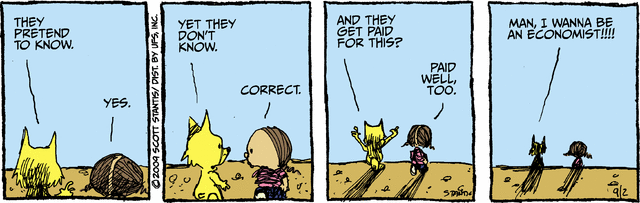
Friday, August 12, 2011

APRIL 8 2011


Abiad, Abdul, Dell'Ariccia, Giovanni,  Li, Bin, IMF:  Creditless Recoveries. Recoveries that occur in the absence of credit growth are often dubbed miracles and named after mythical creatures. Yet these are not rare animals, and are not always miracles. About one out of five recoveries is "creditless", and average growth during these episodes is about a third lower than during "normal" recoveries. Aggregate and sectoral data suggest that impaired financial intermediation is the culprit. Creditless recoveries are more common after banking crises and credit booms. Furthermore, sectors more dependent on external finance grow relatively less and more financially dependent activities (such as investment) are curtailed more during creditless recoveries.

Justin Wolfers, Freakonomics Blog: Advocacy Science: John Taylor Edition. Sometimes you see the perfect piece of evidence. The scatter plot that is just so. The data line up perfectly. And then you realize, perhaps they’re just too perfect. What you are seeing is advocacy, dressed up as science. Here’s an example, provided by John Taylor. But when you look beyond the cherry-picked sample, the correlation is a decidedly unimpressive -0.14.

Scott Shane, Cleveland Fed: The Great Recession’s Effect on Entrepreneurship. Though the recent recession was the worst downturn since the Great Depression, some observers argue that one silver lining is an upswing in entrepreneurship. Recessions, they claim, provide laid-off workers with the motivation to start their own businesses, and a recent study suggests that in 2009 the number people becoming self employed spiked to its highest level in more than a decade. Unfortunately, a careful look at multiple sources of data shows that the Great Recession was actually a time of considerable decline in entrepreneurial activity in the United States.

Jean-Louis Arcand, Enrico Berkes, Ugo Panizza, VoxEU: Too much finance? Over the last three decades the US financial sector has grown six times faster than nominal GDP. This column argues that there comes a point when the financial sector has a negative effect on growth – that is, when credit to the private sector exceeds 110% of GDP. It shows that, of the advanced countries currently suffering in the fallout of the global crisis were all above this threshold.

Barry Eichengreen, Donghyun Park, Kwanho Shin, NBER: When Fast Growing Economies Slow Down: International Evidence and Implications for China. Using international data starting in 1957, we construct a sample of cases where fast-growing economies slow down. The evidence suggests that rapidly growing economies slow down significantly, in the sense that the growth rate downshifts by at least 2 percentage points, when their per capita incomes reach around $17,000 US in year-2005 constant international prices, a level that China should achieve by or soon after 2015. Among our more provocative findings is that growth slowdowns are more likely in countries that maintain undervalued real exchange rates.

Martha A. Starr, American University: Contributions of Economists to the Housing-Price Bubble. This paper analyzes data from 24 California newspapers on assessments and predictions offered by economists as to whether bubbles were forming in the state‟s housing markets. In brief, we find that the California public was fairly decently served by economists offering their views via the media -- although with some significant problems of biased forecasts not made in good faith, and of inattention to concerns about „harm avoidance‟ that ought to apply when economists share their opinions in this way.

Julapa Jagtiani, William W. Lan, Philadelphia Fed: Strategic Default on First and Second Lien Mortgages During the Financial Crisis. Strategic default behavior suggests that the default process is not only a matter of inability to pay. Economic costs and benefits affect the incidence and timing of defaults. As with prior research, we find that people default strategically as their home value falls below the mortgage value (exercise the put option to default on their first mortgage). While some of these homeowners default on both first mortgages and second lien home equity lines, a large portion of the delinquent borrowers have kept their second lien current during the recent financial crisis.

Miki Kohara et al, Osaka University: Is longer unemployment rewarded with longer job tenure? We focus on job tenure as an indicator of a good quality job match after unemployment. We match two sets of Japanese administrative data compiled by the public employment security offices: one includes information about the circumstances of job seekers receiving unemployment insurance, and the other includes information about job seekers applying for jobs. We first show a negative relationship between unemployment duration and the subsequent job duration. Restricting the sample to job seekers who lower their reservation wage in the final 59 days before expiration of unemployment insurance, we secondly show an even greater negative effect of unemployment duration on the following job duration. The importance lies not only in the duration of unemployment. If job seekers keep a high reservation wage because of the benefits of unemployment insurance, and lower it in response to the expiration of insurance, prolonged unemployment will result in short job duration after unemployment.

Michael Greenstone, Adam Looney, The Hamilton Project: Women in the Workforce: Is Wage Stagnation Catching Up to Them Too? American women are responding to market signals and pursuing higher levels of education, making them more competitive in the U.S. and global economies. Women also fared better in the Great Recession and its aftermath. From the start of the recession in 2007, the employment-to-population ratio of women (ages 25 and over) declined by only 4.7 percent—compared with a 7 percent decline among men. That being said, we are also witnessing stagnation in the median earnings of women. While this is concerning, it is likely a broader symptom of declining opportunities for all American workers. Only after the economy has recovered will we have a better sense about whether other factors are the driving force behind this leveling off for women.

Guy Lacroix, Marie-Ève Brouard, IZA: Work Absenteeism Due to a Chronic Disease. Research on health-related work absenteeism focuses primarily on moral hazard issues but seldom discriminates between the types of illnesses that prompt workers to stay home or seek care. This paper focuses on chronic migraine, a common and acute illness that can prove to be relatively debilitating. Our analysis is based upon the absenteeism of workers employed in a large Fortune-100 manufacturing firm in the United States. We model their daily transitions between work and absence spells between January 1996 up until December 1998. Only absences due to migraine and depression, its main comorbidity, are taken into account. Our results show that there is considerable correlation between the different states we consider. In addition, workers who are covered by the Blue Preferred Provided Organization tend to have shorter employment spells but also shorter migraine spells.

Jim Harter, Sangeeta Agrawal, Gallup: Workers in Bad Jobs Have Worse Wellbeing Than Jobless. American workers who are emotionally disconnected from their work and workplace -- known as "actively disengaged" workers -- rate their lives more poorly than do those who are unemployed. Forty-two percent of actively disengaged workers are thriving in their lives, compared with 48% of the unemployed. At the other end of the spectrum are "engaged" employees -- American workers who are involved in and enthusiastic about their work -- 71% of whom are thriving.

Robert J. Shiller, Virginia M. Shiller, Yale University: Economists as Worldly Philosophers. While leading figures in the early history of economics conceived of it as inseparable from philosophy and other humanities, there has been movement, especially in recent decades, towards its becoming an essentially technical field with narrowly specialized areas of inquiry. Certainly, specialization has allowed for great progress in economic science. However, recent events surrounding the financial crisis support the arguments of some that economics needs to develop forums for interdisciplinary interaction and to aspire to broader vision.

Syngjoo Choi et al, NBER: Who Is (More) Rational? Revealed preference theory offers a criterion for decision-making quality: if decisions are high quality then there exists a utility function that the choices maximize. We conduct a large-scale field experiment that enables us to test subjects' choices for consistency with utility maximization and to combine the experimental data with a wide range of individual socioeconomic information for the subjects. There is considerable heterogeneity in subjects' consistency scores: high-income and high-education subjects display greater levels of consistency than low-income and low-education subjects, men are more consistent than women, and young subjects are more consistent than older subjects. We also find that consistency with utility maximization is strongly related to wealth: a standard deviation increase in the consistency score is associated with 15-19 percent more wealth.

Daniel S. Hamermesh, Jason Abrevaya, University of Texas: Beauty Is the Promise of Happiness”? We measure the impact of individuals’ looks on their life satisfaction or happiness. Using five data sets from the U.S., Canada, the U.K., and Germany, we construct beauty measures in different ways that allow putting a lower bound on the true effects of beauty on happiness. Personal beauty raises happiness, with a one standard-deviation change in beauty generating about 0.10 standard deviations of additional satisfaction/happiness among men, 0.12 among women. Accounting for a wide variety of covariates, including those that might be affected by differences in beauty, and particularly effects in the labor and marriage markets, the impact among men is more than halved, among women slightly less than halved. The majority of the effect of beauty on happiness may work through its effects on economic outcomes.


APRIL 1 2011


10 ex-chairs of the president's Council of Economic Advisers, Politico: As former chairmen and chairwomen of the Council of Economic Advisers, who have served in Republican and Democratic administrations, we urge that the Bowles-Simpson report, “The Moment of Truth,” be the starting point of an active legislative process that involves intense negotiations between both parties. There are many issues on which we don’t agree. Yet we find ourselves in remarkable unanimity about the long-run federal budget deficit: It is a severe threat that calls for serious and prompt attention.

Martin Feldstein, Project Syndicate: China’s Five-Year Plan and Global Interest Rates. The future reduction in China’s saving will mean a reduction in China’s current-account surplus – and thus in its ability to lend to the US and other countries. If the new emphasis on increased consumption shrank China’s saving rate by 5% of its GDP, it would still have the world’s highest saving rate. But a five-percentage-point fall would completely eliminate China’s current-account surplus. The impact on the global capital market would be enormous. With no current-account surplus, China would no longer be a net purchaser of US government bonds and other foreign securities. Moreover, if the Chinese government and Chinese firms want to continue investing in overseas oil resources and in foreign businesses, China will have to sell dollar bonds or other sovereign debt from its portfolio. The net result would be higher interest rates on US and other bonds around the world.

Jesse Bricker et al, Fed: Surveying the Aftermath of the Storm: Changes in Family Finances from 2007 to 2009. The data show signs that families’ behavior may act in some ways as a brake on reviving the economy in the short run. Two things stand out in this regard. First, a large proportion of families in all wealth groups and across the range of changes in wealth expressed the need for greater precautionary savings. In general, compared with families with relative losses, the families with relative gains appeared more pessimistic and cautious before the crisis, and in the 2009 survey they remained cautious even though their wealth had increased. The perceived desire for additional savings is further amplified by answers to open-ended questions about recent and future adjustments to family finances. Second, the data show a tendency for families to respond asymmetrically to changes in wealth. Overall, it appears that families may be relatively reluctant to spend more when asset prices rise and may more readily reduce spending when asset prices fall.

Daniel Cohen, Cécile Valadier, CEPR: 40 Years of Sovereign Debt Crises. The paper compiles a new data base, based on the earlier work by Kray and Nehu, to assess the determinants of sovereign debt crises over the last forty years. A simple statistical analysis of the cause of the crises is performed. It shows that neither the serial defaulter nor the "global crisis" theories of sovereign crises explain much. Sovereign debt crises owe mostly to the level of indebtedness of the countries. About half the risk factor such as we shall compute it originates from this term. The remainder owes for another 25% to the quality of governance of the country, such as captured by the CPIA index which measures indirectly the ability of countries to wither external bad shock. On these fronts, we show that the bulk of countries which were at the center of previous crises are now below the danger zone, which explains why, for them, this crisis was different

Ozkan Eren, Daniel J. Henderson, IZA: Are We Wasting Our Children's Time by Giving Them More Homework? Following an identification strategy that allows us to largely eliminate unobserved student and teacher traits, we examine the effect of homework on math, science, English and history test scores for eighth grade students in the United States. Noting that failure to control for these effects yields selection biases on the estimated effect of homework, we find that math homework has a large and statistically meaningful effect on math test scores throughout our sample. However, additional homework in science, English and history are shown to have little to no impact on their respective test scores.

Thomas Bolli, KOF: The Global Production Frontier of Universities. This paper provides first micro-level evidence of the global university production frontier, allowing to estimate technical efficiencies of 273 top research universities across 29 countries between 2007 and 2009. The estimated input distance function uses undergraduate students, graduate students and citations to capture university outputs and staff to measure inputs. Contrasting two alternative econometric strategies to identify technical efficiency yields relatively stable results. Universities in Switzerland and Israel appear to be very efficient (and indeed they are small are generate a good amount of research) while those in the UK seem particularly inefficient.

Karen A. Kopecky, Jeremy Greenwood, Atlanta Fed: Measuring the Welfare Gain from Personal Computers: A Macroeconomic Approach. The welfare gain to consumers from the introduction of personal computers is estimated here. A simple model of consumer demand is formulated that uses a slightly modified version of standard preferences. The modification permits marginal utility, and hence total utility, to be finite when the consumption of computers is zero, implying that the good won't be consumed at a high enough price. It also bounds the consumer surplus derived from the product. The model is calibrated and estimated using standard national income and product account data. The welfare gain from the introduction of personal computers is in the range of 2 percent to 3 percent of consumption expenditure.

Sietse Bracke, Koen Schoors and Gerd Verschelden, Gent University: No-Fault Divorce and Rent-Seeking. Couples filing for divorce in Belgium have the option to either opt for a no-fault divorce trajectory or a consensual trajectory. We analyse the determinants of divorce trajectory choice and of the resulting post-divorce transfers. The no-fault trajectory is more likely, if spouses are more specialised in either domestic or labour market production. This is consistent with a theory of divorce as rent extraction. Child support payments depend neither on the divorce trajectory nor on alimony transfers or relative incomes, but are driven by the payer's wage and the child(ren)'s residence. Partner alimony transfers are higher for no-fault unilateral divorces with pronounced self sacrifice.

Jinhu Li, Jeremiah Hurley, Philip DeCicca, Gioia Buckley, NBER: Physician Response to Pay-for-Performance: Evidence from a Natural Experiment. We use an administrative data source which covers the full population of the province of Ontario and nearly all the services provided by practicing primary care physicians in Ontario. With an individual-level data set of physicians, we employ a difference-in-differences approach that controls for both "selection on observables" and "selection on unobservables" that may cause estimation bias in the identification.        The results indicate that, while all responses are of modest size, physicians responded to some of the financial incentives but not the others.  The differential responses appear related to the cost of responding and the strength of the evidence linking a service with quality.  Overall, the results provide a cautionary message regarding the effectiveness of pay-for-performance schemes for increasing quality of care.

Elizabeth Ty Wilde, Lily Batchelder, David T. Ellwood, NBER: The Mommy Track Divides: The Impact of Childbearing on Wages of Women of Differing Skill Levels. This paper explores how the wage and career consequences of motherhood differ by skill and timing. Past work has often found smaller or even negligible effects from childbearing for high-skill women, but we find the opposite. Wage trajectories diverge sharply for high scoring women after, but not before, they have children, while there is little change for low-skill women. It appears that the lifetime costs of childbearing, especially early childbearing, are particularly high for skilled women. These differential costs of childbearing may account for the far greater tendency of high-skill women to delay or avoid childbearing altogether.

Julie L. Hotchkiss, M. Melinda Pitts, and Mary Beth Walker, Atlanta Fed: To Work or Not to Work: The Economics of a Mother's Dilemma. Utilizing linked vital statistics, administrative employer, and state welfare records, the analysis in this paper investigates the determinants of a woman's intermittent labor force decision at the time of a major life event: the birth of a child. The results indicate that both direct and opportunity labor market costs of exiting the workforce figure significantly into that decision. Further, the analysis reveals the importance of including information about the mother's prebirth job when making inferences about the role various demographics play in the intermittent labor force decision.

Friedhelm Pfeiffer, Nico Johannes Schulz, ZEW: Gregariousness, interactive jobs and wages. Gregariousness is an important aspect of human life with implications for labour market outcomes. The paper examines, to the best of our knowledge for the first time for Germany, gregariousness and social interaction at the workplace and associated wage differentials. Our empirical findings with samples from the German Socio-Economic Panel (SOEP) demonstrate that gregarious people more often work in jobs with social interaction. Furthermore, females tend to work more often in interactive jobs compared to males. There is evidence that working in an interactive job is associated with a compensating negative wage differential of 7 percent for women and non for men.

MARCH 25 2011


Economics Department, OECD: The Effects of Oil Price Hikes On Economic Activity and Inflation. The effects of oil price hikes on activity and inflation can be gauged using the OECD’s Global Model. Accordingly, a $10 increase in the price of oil could reduce activity in the OECD area in the second year after the shock by two tenths of a percentage point and raise inflation by roughly two tenths of a percentage point in the first year and by another one-tenth in the second year.1 These multipliers exclude dynamic effects, such as the impact of ongoing balance-sheet repair on the response of household saving to a fall in real incomes. Higher oil prices are also likely to take a toll on potential growth, due to higher input costs and the detrimental effect of increased price volatility on business investment. The recent oil price hikes may have a modest impact on activity in the near term. On the basis of the OECD Global Model multipliers and EO88 projections, if the $25 increase in the price of oil that has taken place since the Tunisian uprising were to be sustained, activity could be reduced by about 0.5 percentage points in the OECD area by 2012 and inflation could rise by 0.75 percentage points.

David Wessel, WSJ Blog: Barry Eichengreen on the End of Dollar Dominance. People have been predicting the demise of the dollar for half a century. I do think the world is changing now in a couple of fundamental ways. First, our children and grandchildren will live in a world where the Chinese economy is larger than the U.S. economy. Demographics, if nothing else, dictate that. It will make no sense for the dollar to be the only true global currency in a world where the U.S. accounts for 15% or 20% at most of real economic activity. Second, the technology of finance is changing. Once upon a time, you could make the argument that there was only room in the world for one true global currency. The arguments in favor of the dollar were stronger than the arguments favoring the alternatives. I think the technology of finance is becoming more open. In a world where you can compare currency values on your smartphone, it’s easier for several true international currencies to coexist. So the question is which ones?

David Aikman, Andrew G Haldane, Benjamin Nelson, VoxEU: Curbing the credit cycle. Credit booms sow the seeds of subsequent credit crunches. This column argues that these have their source in cross-bank externalities. To internalise these cross-sectional spillovers, policy should operate “across the system”. It adds that this is the essence of macro-prudential policy, which, for the first time is about to be undertaken internationally. The state of macro-prudential policy today has many similarities with the state of monetary policy just after the Second World War. Data is incomplete, theory patchy, policy experience negligible. Monetary policy then was conducted by trial and error. The same will be true of macro-prudential policy now. Mistakes will be made. But as experience with the other arms of macroeconomic policy, as well as during the credit crunch, has taught us, the biggest mistake would be not to try.

Robert J. Shiller, Commentary, Project Syndicate: Bubble Spotting. It is impossible for anyone to predict bubbles accurately. In my view, bubbles are social epidemics, fostered by a sort of interpersonal contagion. A bubble forms when the contagion rate goes up for ideas that support a bubble. But contagion rates depend on patterns of thinking, which are difficult to judge. A continuation of today’s commodity-price boom has more of a “new era” story attached to it. Increasing worries about global warming, and its effects on food prices, or about the cold and snowy winter in the northern hemisphere and its effects on heating fuel prices, are contagious stories. They are even connected to the day’s top story, the revolutions in the Middle East, which, according to some accounts, were triggered by popular discontent over high food prices – and which could themselves trigger further increases in oil prices. But my favorite dark-horse bubble candidate for the next decade or so is farmland – and not just because there have been stories in recent months of booming farmland prices in the US and the United Kingdom.

Rabah Arezki, Markus Brückner, IMF: Food Prices and Political Instability. Our main finding is that in Low Income Countries increases in the international food prices lead to a significant deterioration of democratic institutions and a significant increase in the incidence of anti-government demonstrations, riots, and civil conflict. In the High Income Countries variations in the international food prices have no significant effects on democratic institutions and measures of intra-state conflict. Our empirical results point to a significant externality of variations in international food prices on Low Income Countries' social and political stability.

Richard W. Kopcke, Zhenya Karamcheva, CRR: Equity Returns in the Coming Decade. Many forecasters have extended projections for a weak economic recovery to projections for subpar returns on stocks in coming years. According to this view, the return on stocks depends on capital gains, and the potential for capital gains is limited by businesses’ ability to expand. This brief observes, instead, that the return on stocks depends on corporations’ capacity to generate earnings and on the prices investors are willing to pay for those earnings. Stocks currently are priced near 15 times earnings, offering stockholders a potential real return of 6.5 percent provided that corporations can maintain their earnings and price-earnings ratios do not drop in the future. Over the coming decade, if earnings continue to recover as they have during past business cycles, stocks are likely to pay returns that compare favorably to their historical averages."

Lars Calmfors, CESIFO: The Role of Independent Fiscal Policy Institutions. The paper analyses how independent fiscal watchdogs (fiscal policy councils) can strengthen the incentives for fiscal discipline. By increasing fiscal transparency they can raise the awareness of the long-run costs of current deficits and increase the reputational costs for governments of violating their fiscal rules. Councils that make also normative judgements, where fiscal policy is evaluated against the government’s own pre-set objectives, are likely to be more influential than councils that do only positive analysis. To fulfil their role adequately, fiscal watchdogs should be granted independence in much the same way as central banks.

Dionissi Aliprantis, Mary Zenker, Cleveland Fed: Educational Attainment and Employment. Higher educational attainment is associated with smaller changes in unemployment. The story of unemployment duration is quite different. The recent recession caused a very large spike in the length of time workers remain unemployed, and spells of unemployment are now similar for workers at all levels of educational attainment. It is interesting that the differences in labor force participation and unemployment rates do not translate into differences for duration.

Victor Lavy, NBER: What Makes an Effective Teacher? Quasi-Experimental Evidence. This paper measures empirically the relationship between classroom teaching practices and student achievements.  Based on primary- and middle-school data from Israel, I find very strong evidence that two important elements of teaching practices cause student achievements to improve.  In particular, classroom teaching that emphasizes the instilment of knowledge and comprehension, often termed "traditional"-style teaching, has a very strong and positive effect on test scores, particularly among girls and pupils of low socioeconomic background.  Second, the use of classroom techniques that endow pupils with analytical and critical skills ("modern" teaching) has a very large positive payoff, evidenced in improvement of test scores across subgroups differentiated by gender and socioeconomic background.

Dana Chandler et al, Chicago University, Youtube: Lectures on Human Capital by Gary Becker. This series of lectures recorded during the Spring of 2010 are from ECON 343 -- Human Capital, a class taught every year by Gary Becker at the University of Chicago. In this class, Becker expounds upon the theory of Human Capital that he helped create and for which he won the Nobel Prize. In total, there are 19 lectures. Each lecture includes a short description of topics covered as well as topical keywords. The interested viewer is also provided with references to books and journal articles from Gary Becker's own original research that bear on the topics discussed in each lecture.

Justin Wolfers, Freakonomics Blog: Economic Research Wants to Be Free. If my students learn only one thing, it’s this: Price equals marginal cost. And the marginal cost of accessing a journal article is pretty much zero. The research has been written, the type has been set, and the salaries have already been paid — usually thanks to a university, think tank, or government grant. So the socially optimal price is: free.  Every time we charge a price higher than this, we risk pricing out someone who might benefit from the insights of an academic scribbler. The Brookings Papers on Economic Activity has decided to take this piece of economic wisdom seriously. The Brookings Papers are now entirely open access.

Daniela Schiller, David Carmel, Scientific American: How Free Is Your Will? Fried and his colleagues implanted electrodes in twelve patients, recording from a total of 1019 neurons. They had their patients look at a hand sweeping around a clock-face, asked them to press a button whenever they wanted to, and then had them indicate where the hand had been pointing when they decided to press the button. [A]bout a quarter of these neurons began to change their activity before the time patients declared as the moment they felt the urge to press the button. The change began as long as a second and a half before the decision. These findings are mind-boggling. They indicate that some activity in our brains may significantly precede our awareness of wanting to move. Libet suggested that free will works by vetoing: volition (the will to act) arises in neurons before conscious experience does, but conscious will can override it and prevent unwanted movements.

Wednesday, March 23, 2011

MARCH 18 2011

Ilan Noy, Econbrowser: The Macroeconomic Aftermath of the Earthquake/Tsunami in Japan. The likely indirect impacts of this horrific earthquake/tsunami event on growth in the Japanese economy will be quite minimal. The Japanese government and the Japanese people have access to large amounts of human and financial resources that can be directed toward a rapid and robust reconstruction and rebuilding of the affected region. Neither do we have any evidence to suggest that the earthquake is likely to have any enduring monetary effects. The fiscal expansion that will follow this disaster will further increase the Japanese government's debt levels, but since this debt largely stays in Japan, and since are likely to 'tighten their belts' and reduce consumption temporarily, these other affects are unlikely to be enduring as well.

Robert Peston, BBC: How will Japan finance its reconstruction? Japan is far less dependent on the vagaries of the sentiment of overseas investors than most big borrowers, such as the US. In the current circumstances where Japanese people and institutions face a huge test of their resolve, they may be more determined than ever to lend to the government - as an act of solidarity, as a tangible sign of the collective will to reconstruct their country. But even so, the Japanese government is in a hideous position, under pressure from markets to cut borrowing at just the time when the imperative of rebuilding the country will require a massive deployment of government money.

David H. Romer, IMF direct: An Important Starting Point—with One Gap. The current outlook for unemployment in the United States, Europe, and Japan is probably worse than it was in late 2008. Then, mainstream forecasts for 2009–2011 showed unemployment rising sharply—but generally to levels below what we are experiencing today—and then returning toward normal at a moderate pace. Today, not only is unemployment higher than most 2008 forecasts of its peak levels, but the expected pace of recovery is weaker. Despite this deterioration, the dire sense of urgency in late 2008 has not increased. Indeed, it has largely disappeared. I find this complacency in the fact of vast, preventable suffering and waste hard to understand

Fernanda Nechio, San Francisco Fed: Long-Run Impact of the Crisis in Europe: Reforms and Austerity Measures. The euro area faces its first sovereign debt crisis, highlighting the fiscal imbalances of member countries. Troubled countries are implementing austerity measures, with adjustments focusing on the short and medium run. However, a long-run solution to Europe's problems requires economic reforms that increase competitiveness and reduce labor costs in the peripheral countries. Such reforms would promote convergence of the euro-area economies and enhance the long-run sustainability of monetary union.

Nicolas Magud, Sebastián Sosa, VoxEU: When and why worry about real exchange-rate appreciation? The missing link between Dutch disease and growth. In the 1960s, the Netherlands discovered natural gas in the North Sea. Yet as its wealth increased, so did the value of its currency. Exports fell and the phrase “Dutch disease” was born. This column reviews the literature and finds no evidence that the Dutch disease actually reduces overall economic growth.

Kellogg Institute (Shane Greenstein et al): What has the Internet Done for the Economy? The puzzling spread of the commercial Internet could explain wage inequalities. There is widespread optimism among media commentators and policy makers that the Internet erases geographic and socioeconomic boundaries. The Death of Distance and The World Is Flat, two books that espouse that rosy view, were bestsellers. But in the early days of the Internet, the income gap between the upper and middle classes actually began to grow. Out of about 3,000 counties in the U.S., in only 163 did business adoption of Internet technologies correlate with wage and employment growth, the study found. All of these counties had populations above 150,000 and were in the top quarter of income and education levels before 1995. Between 1995 and 2000, they showed a 28 percent average increase in wages, compared with a 20 percent increase in other counties.

Alan Krueger, Andreas Mueller, Princeton: Job search in a period of mass unemployment. This paper presents findings from a survey of 6,025 unemployed workers who were interviewed every week for up to 24 weeks in the fall of 2009 and spring of 2010. Our main findings are: (1) the amount of time devoted to job search declines sharply over the spell of unemployment; (2) the self-reported reservation wage predicts whether a job offer is accepted or rejected; (3) the reservation wage is remarkably stable over the course of unemployment for most workers, with the notable exception of workers who are over age 50 and those who had nontrivial savings at the start of the study; (4) many workers who seek full-time work will accept a part-time job that offers a wage below their reservation wage; and (5) the amount of time devoted to job search and the reservation wage help predict early exits from Unemployment Insurance (UI).

James J. Heckman, IZA: The American Family in Black and White: A Post-Racial Strategy for Improving Skills to Promote Equality. In contemporary America, racial gaps in achievement are primarily due to gaps in skills. Skill gaps emerge early before children enter school. Families are major producers of those skills. Inequality in performance in school is strongly linked to inequality in family environments. Schools do little to reduce or enlarge the gaps in skills that are present when children enter school. Parenting matters, and the true measure of child advantage and disadvantage is the quality of parenting received. A growing fraction of American children across all race and ethnic groups is being raised in dysfunctional families. Investment in the early lives of children in disadvantaged families will help close achievement gaps. America currently relies too much on schools and adolescent remediation strategies to solve problems that start in the preschool years. Policy should prevent rather than remediate. Voluntary, culturally sensitive support for parenting is a politically and economically palatable strategy that addresses problems common to all racial and ethnic groups.

Eric Bonsang, Tobias J. Klein, IZA: Retirement and Subjective Well-Being. We provide an explanation for the common finding that the effect of retirement on life satisfaction is negligible. For this we use subjective well-being measures for life and domains of life satisfaction that are available in the German Socio-Economic Panel (GSOEP) and show that the effect of voluntary retirement on satisfaction with current household income is negative, while the effect on satisfaction with leisure is positive. At the same time, the effect on health satisfaction is positive but small. Following the life domain approach we then argue that these effects offset each other for an average individual and that therefore the overall effect is negligible. Furthermore, we show that it is important to distinguish between voluntary and involuntary retirement. The effect of involuntary retirement is negative because the adverse effect on satisfaction with household income is bigger, the favorable effect on satisfaction with leisure is smaller, and the effect on satisfaction with health is not significantly different from zero. These results turn out to be robust to using different identification strategies such as fixed effects and first differences estimation, as well as instrumental variables estimation using eligibility ages and plant closures as instruments for voluntary and involuntary retirement.

Christopher Heady, VoxEU: Tax policy to aid recovery and growth. Have governments been cutting the right taxes? And are they choosing the best taxes to increase now that they need to balance the books? Using data from 21 OECD countries, this column argues that the best taxes to cut early on are income taxes for low earners, while the best taxes to increase – later on – are property taxes and consumption taxes.

Indranil Dutta, James Foster, University of Manchester: Inequality of Happiness in US: 19722008. Since happiness is an important indicator of subjective well-being, understanding the distribution of happiness across the population is also crucial. The happiness data is of ordinal nature thus the use of standard inequality indices to measure happiness inequality is problematic since the results may be inconsistent under different scales. In this paper, using a methodology developed by Allison and Foster (2004), we calibrate the happiness inequality in the US, from 1972 to 2008. We find that 1990 was the best year both in terms of lower happiness inequality and higher well-being. It was closed followed by 1988 and 1989. In terms of broad trends, happiness inequality decreased, from its highest level in 1970's, through the 1980's and 1990's. Only in the 2000's it has started to rise again. There, are however, considerable variation across gender, race and region.

Ruby Henry, IZA: Smart and Dangerous: How Cognitive Skills Drive the Intergenerational Transmission of Retaliation. A need exists to understand how people develop an aggressive, retaliatory conflict resolution policy vs. a more passive reconciliation stance. I contribute a choice-theoretic model that explains how cognitive skills drive the transmission of conflict resolution policies. A child’s resolution policy depends on parental effort and the influence of the outside environment. The model has the implication that high-cognitive parents socialize children to their conflict resolution culture more successfully than parents with low cognitive skills. Indeed, I test the model using the cognitive skills and conflict resolution skills of parents and children from the UK National Childhood Development Survey. I find that the parent’s effort is reinforced by the prevalence of their conflict resolution values in society. The data confirm that children of retaliating high-cognitive parents are more likely to be socialized to that resolution culture than children of low-cognitive retaliating parents when retaliation is more prominent in society.

MARCH 11 2011

Marcus Kappler, Helmut Reisen, Moritz Schularick, Edouard Turkisch: Half a century of large currency appreciations: Did they reduce imbalances and output? If China only allowed its currency to appreciate, the global economy would rebalance and stabilise – or so the argument goes. This column studies the historical record of large exchange-rate revaluations. It supports the idea that currency appreciations have an impact on the current account but argues that this can come at a cost – the reduction in exports risks putting the brakes on global growth.

ECO, OECD: The Impact of Structural Reforms on Current Account Imbalances. Global current account imbalances widened markedly in the years preceding the global economic crisis. Although the crisis brought some reversal to this trend, imbalances remain large in many countries. New empirical analysis by the OECD has examined the potential contribution of structural reforms to reducing current account imbalances.
The analysis shows that structural reforms aimed at boosting economic growth can have more or less persistent side effects on current accounts. These arise because structural policies influence saving and investment of households, firms and governments. In turn, the economy-wide gap between saving and investment equals the current account balance.

Dani Rodrik's weblog: More on growth-reducing structural change. The African countries in our sample (Ethiopia, Ghana, Kenya, Malawi, Mauritius, Nigeria, Senegal, South Africa, and Zambia) have experienced even more growth-reducing structural change than the Latin American countries. This runs totally against our expectations for a set of countries at such low levels of development (for the most part), where a Lewis-style dual economy growth dynamic ought to be in place. The chart makes clear that the bulk of the difference in economic performance since 1990 between Asia, on the one hand, and Latin America and Africa, on the other, is accounted for by differences in patterns of structural change. Asian countries have, on average, experienced growth-enhancing structural change; not so the others.

Paul Krugman, NYT: Degrees and Dollars. Most of the manual labor still being done in our economy seems to be of the kind that’s hard to automate. Notably, with production workers in manufacturing down to about 6 percent of U.S. employment, there aren’t many assembly-line jobs left to lose. Meanwhile, quite a lot of white-collar work currently carried out by well-educated, relatively well-paid workers may soon be computerized. Roombas are cute, but robot janitors are a long way off; computerized legal research and computer-aided medical diagnosis are already here. And research by my Princeton colleagues Alan Blinder and Alan Krueger suggests that high-wage jobs performed by highly educated workers are, if anything, more “offshorable” than jobs done by low-paid, less-educated workers. If they’re right, growing international trade in services will further hollow out the U.S. job market.

Cahuc, Pierre, Carcillo, Stéphane,  Ecole Polytechnique: The Detaxation of Overtime Hours: Lessons from the French Experiment. In October 2007 France introduced an exemption on the income tax and social security contributions that applied to wages received for hours worked overtime. The goal of the policy was to increase the number of hours worked. This article shows that this reform has had no significant impact on hours worked. Conversely, it has had a positive impact on the overtime hours declared by highly qualified wage-earners, who have opportunities to manipulate the overtime hours they declare in order to optimize their tax situation, since the hours they work are difficult to verify.

Monique de Haan, Edwin Leuven, Hessel Oosterbeek, IZA: Scale Economies Can Offset the Benefits of Competition: Evidence from a School Consolidation Reform in a Universal Voucher System. A large school consolidation reform in the Netherlands changed minimum school size rules underlying public funding. The supply of schools decreased by 15 percent, but this varied considerably across municipalities. We find that reducing the number of schools by 10 percent increases pupils' achievement by 3 percent of a standard deviation. A reduction in the supply of schools implies, for a given number of pupils, an increase in average school size. We present evidence that in our context scale economies dominated the effects of choice and competition. This points to an often ignored trade-off between scale and competition.

Andreas Peichl, Nico Pestel, Sebastian Siegloch, IZA: The Politicians' Wage Gap: Insights from German Members of Parliament. Using a unique dataset of German members of parliament with information on total earnings including outside income, this paper analyzes the politicians’ wage gap (PWG). After controlling for observable characteristics as well as accounting for selection into politics, we find a positive PWG which is statistically and economically significant. It amounts to 40-60% compared to citizens with an executive position. Hence, we show that the widely held claim that politicians would earn more in the private sector is not confirmed by our data. Our findings are robust with respect to potential unobserved confounders. We further show that the PWG exceeds campaigning costs and cannot be justified by extraordinary workload. Hence, our results suggest that part of the PWG can be interpreted as rent extraction. This calls for a reform of the regulation of outside earnings, which account for a sizeable share of the wage premium.

Aida Caldera Sánchez1, Dan Andrews, OECD: To Move or not to Move: What Drives Residential Mobility Rates in the OECD? Based on cross-sectional household data for 25 countries, the results suggest that differences in residential mobility across countries are partially related to differences in public policies. After controlling for household and country-specific characteristics, residential mobility is higher in countries with lower transaction costs, more responsive housing supply, lower rent controls and tenant protection. Residential mobility tends also to be higher in environments with greater access to credit, suggesting that financial deregulation – by lowering borrowing costs and facilitating access to mortgage finance – facilitates mobility. This cross-country evidence is supported by city and state-level evidence for the United States, which also highlights the potential risks that high leverage rates pose to residential mobility.

Roland G. Fryer, NBER:  Teacher Incentives and Student Achievement: Evidence from New York City Public Schools. Financial incentives for teachers to increase student performance is an increasingly popular education policy around the world.  This paper describes a school-based randomized trial in over two-hundred New York City public schools designed to better understand the impact of teacher incentives on student achievement.  I find no evidence that teacher incentives increase student performance, attendance, or graduation, nor do I find any evidence that the incentives change student or teacher behavior.  If anything, teacher incentives may decrease student achievement, especially in larger schools.  The paper concludes with a speculative discussion of theories that may explain these stark results.

Alan Barrett, Bertrand Maitre, IZA: Immigrant Welfare Receipt across Europe. In this paper, we assess whether immigrants are more likely to receive welfare payments relative to natives across a range of European countries. Using the European Union Survey on Income and Living Conditions for 2007, we find very little evidence that immigrants are indeed more likely to receive such payments when all payments are considered together. This is true whether we use raw data or regression analysis in which we control for relevant characteristics. We do find evidence of higher rates of poverty among immigrants. When combined with the results on welfare receipt, this raises a question over the effectiveness of welfare systems in protecting immigrants from poverty across Europe.

Adam Gopnik, The New Yorker: The Information. How the Internet gets inside us. A Critic at Large. That the reality of machines can outpace the imagination of magic, and in so short a time, does tend to lend weight to the claim that the technological shifts in communication we’re living with are unprecedented. It isn’t just that we’ve lived one technological revolution among many; it’s that our technological revolution is the big social revolution that we live with. The past twenty years have seen a revolution less in morals, which have remained mostly static, than in means: you could already say “fuck” on HBO back in the eighties; the change has been our ability to tweet or IM or text it. The set subject of our novelists is information; the set obsession of our dons is what it does to our intelligence.

Mirjam Tuk, APS: Full Bladder, Better Decisions? Controlling Your Bladder Decreases Impulsive Choices. In one experiment, participants either drank five cups of water (about 750 milliliters), or took small sips of water from five separate cups. Then, after about 40 minutes—the amount of time it takes for water to reach the bladder—the researchers assessed participants’ self-control. Participants were asked to make eight choices; each was between receiving a small, but immediate, reward and a larger, but delayed, reward. For example, they could choose to receive either $16 tomorrow or $30 in 35 days. The researchers found that the people with full bladders were better at holding out for the larger reward later. 

MARCH 4 2011

Christina D. Romer, NYT: The Debate That’s Muting the Fed’s Response. The Fed could engage in much more aggressive quantitative easing, both in size and in scope, to further lower long-term interest rates and value of the dollar. It could more effectively convey to markets its intentions for the funds rate, which would also lower long-term rates. And it could set a price-level target, which, unlike an inflation target, calls for Fed policy to take past years’ price changes into account. That would lead the Fed to counteract some of the extremely low inflation during the recession with a more expansionary policy and lower real rates for a while. All of these alternatives would be helpful and would retain the Fed’s credibility as a defender of price stability. And any would be better than doing too little just because some Fed policy makers believe in an unproven, theoretical view of how inflation works.

Barry Eichengreen, Spiegel: 'Europe's Banks Are in Far Greater Danger Than People Realize'. The present bailout attempts have never made sense. Essentially, all Germany and France want to achieve with these measures is to protect their own banks from collapsing. Now people are beginning to realize that there is no way around rescheduling Greece's debt -- and that will also involve the banks. For this to happen, there is only one solution: Europe needs to strengthen its banks! Greece lived beyond its means, but in Ireland and Spain it is the banks that are the problem. The euro crisis is first and foremost a banking crisis.

Rochelle M Edge, Refet S. Gürkaynak, VoxEU: Dynamic stochastic general equilibrium models and their forecasts. Studies have shown that the forecasts from dynamic stochastic general equilibrium models perform better than central banks' judgemental forecasts as well as forecasts based on statistical analysis but without a theoretical foundation. This column shows that performing better is hardly good performance given how badly all three forecasts compare with reality.

Olivier Blanchard, Gian Maria Milesi-Ferretti:  (Why) Should Current Account Balances Be Reduced? The purpose of this note is to discuss two complex issues. First, why might a country want to reduce its current account deficit or surplus? And second, why might the international community ask for more? Answers to these questions are needed to inform the design of “rules of the game” that countries should abide by, and address the G-20’s request to the IMF to help develop “indicative guidelines” for the reduction of global current account imbalances. In general, there are both domestic and multilateral reasons for countries to reduce current account deficits and surpluses. In many cases, current account balances reflect underlying domestic distortions. It is then in the interest of the country to remove those distortions and, in the process, reduce imbalances. We identify three instances in which the case for reducing imbalances rests on multilateral considerations.

Kenneth Rogoff, Project Syndicate: Global Imbalances without Tears. With policymakers and pundits railing against sustained oversized trade imbalances, we need to recognize that the real problems are rooted in excessive concentrations of debt. If G-20 governments stood back and asked themselves how to channel a much larger share of the imbalances into equity-like instruments, the global financial system that emerged just might be a lot more robust than the crisis-prone system that we have now.

Patrick Slovik, Boris Cournède, OECD: Macroeconomic Impact of Basel III. The estimated medium-term impact of Basel III implementation on GDP growth is in the range of -0.05 to -0.15 percentage point per annum. Economic output is mainly affected by an increase in bank lending spreads as banks pass a rise in bank funding costs, due to higher capital requirements, to their customers. To meet the capital requirements effective in 2015 (4.5% for the common equity ratio, 6% for the Tier 1 capital ratio), banks are estimated to increase their lending spreads on average by about 15 basis points. The capital requirements effective as of 2019 (7% for the common equity ratio, 8.5% for the Tier 1 capital ratio) could increase bank lending spreads by about 50 basis points. The estimated effects on GDP growth assume no active response from monetary policy. To the extent that monetary policy will no longer be constrained by the zero lower bound, the Basel III impact on economic output could be offset by a reduction (or delayed increase) in monetary policy rates by about 30 to 80 basis points.

Galina Hale, San Francisco Fed: Could We Have Learned from the Asian Financial Crisis of 1997-98? Economists drew a number of lessons from the Asian financial crisis of 1997-98 for preventing such episodes or mitigating their effects. Some of those are similar to lessons drawn from the global financial crisis of 2007-09. But differences in economic development and sophistication of the financial systems of East Asian countries compared with those of the United States and Western Europe made it difficult to apply the lessons of the earlier crisis.

Something pretty incredible is going on in Germany. While the U.S. and much of the rest of the developed world is suffering not only with high unemployment, but also stubborn unemployment, Germany has been heading in the exact opposite direction. Defying the odds, Germany's unemployment rate has been declining during the Great Recession. According to the OECD, German unemployment stood at 8.6% in the boom year of 2007; in 2010, the OECD estimates unemployment fell to 6.9%.

Robert Barro, WSJ: Unions vs. the Right to Work. Labor unions like to portray collective bargaining as a basic civil liberty, akin to the freedoms of speech, press, assembly and religion. For a teachers union, collective bargaining means that suppliers of teacher services to all public school systems in a state—or even across states—can collude with regard to acceptable wages, benefits and working conditions. An analogy for business would be for all providers of airline transportation to assemble to fix ticket prices, capacity and so on. From this perspective, collective bargaining on a broad scale is more similar to an antitrust violation than to a civil liberty.

Mark Thoma, The Fiscal Times: How Unions’ Trickle-Down Effect Trickled Away. Unions may have been the answer at one time, but the world has changed since the 1970s. In today’s increasingly globalized world where private-sector companies can easily move production to escape unions, where unionized jobs are disappearing because of technological change, and where states are passing laws to reduce power the power of organized labor, unions are losing their influence. The only institution powerful enough to protect workers now is government. However, it’s hard to be optimistic that any of this will actually happen. Budget problems and political realities make it unlikely that government will provide new benefits or engage in substantial redistribution. In fact, with the way things look these days, working-class households will be lucky to keep what they already have.

Annette Bergemann, Marco Caliendo, Gerard J. van den Berg, Klaus F. Zimmermann, IZA: The Threat Effect of Participation in Active Labor Market Programs on Job Search Behavior of Migrants in Germany. Labor market programs may affect unemployed individuals' behavior before they enroll. Such ex ante effects may differ according to ethnic origin. We apply a novel method that relates self-reported perceived treatment rates and job search behavioral outcomes, such as the reservation wage or search intensity, to each other. We compare German native workers with migrants with a Turkish origin or Central and Eastern European (including Russian) background. Job search theory is used to derive theoretical predictions. We examine the omnibus ex ante effect of the German ALMP system, using the novel IZA Evaluation Data Set, which includes self-reported assessments of the variables of interest as well as an unusually detailed amount of information on behavior, attitudes and past outcomes. We find that the ex ante threat effect on the reservation wage and search effort varies considerably among the groups considered.

Sáez-Martí, Maria,  Zenou, Yves, Stockholm University: Cultural Transmission, Discrimination and Peer Effects. Workers can have good or bad work habits. These traits are transmitted from one generation to the next through a learning and imitation process which depends on parents’ investment on the trait and the social environment where children live. We show that, if a high enough proportion of employers have taste-based prejudices against minority workers, their prejudices are always self-fulfilled in steady state. Affirmative Action improves the welfare of minorities whereas integration is beneficial to minority workers but detrimental to workers from the majority group. If Affirmative Action quotas are high enough or integration is strong enough, employers’ negative stereotypes cannot be sustained in steady-state.

Catherine Rampell, NYT Blog: Bernanke for Early Childhood Education? Traditionally, Federal Reserve chairmen have generally avoided wading into fiscal policy matters, in order to help preserve the independence of the Fed. The Fed, after all, sets monetary policy, and it doesn’t want politicians sticking their noses into interest rates either. My how times have changed. On Wednesday, the Fed chairman, Ben S. Bernanke, not only gave an entire speech about the spending and taxation challenges facing local governments but explicitly advocated against cuts to education spending:

Rajashri Chakrabarti, NY Fed: Vouchers, Responses, and the Test-Taking Population: Regression Discontinuity Evidence from Florida. This paper investigates whether the threat of vouchers and the stigma associated with the Florida program induced schools to strategically manipulate their test-taking population. Under Florida rules, scores of students in several special-education and limited-English-proficient (LEP) categories were not included in the computation of school grades. Did this rule induce the threatened schools to reclassify some of their weaker students into these “excluded” categories so as to remove them from the effective test-taking pool? Using a regression discontinuity strategy, I find evidence in favor of strategic reclassification into the excluded LEP category in high-stakes grade 4 and entry-grade 3. In contrast, I find no evidence that the program led to reclassification into excluded special-education categories, which is consistent with the substantial costs of classifying into special-education categories during this period. These findings have important policy implications.

Simon Burgess, Deborah Wilson, Jack Worth, University of Bristol: A natural experiment in school accountability: the impact of school performance information on pupil progress and sorting. We test the hypothesis that the publication of school performance tables raises school effectiveness. Our data allow us to implement a classic difference-in-difference analysis comparing outcomes in England and Wales, before and after the abolition of the tables in Wales. We find significant and robust evidence that this reform markedly reduced school effectiveness in Wales. There is significant heterogeneity across schools: schools in the top quartile of the league tables show no effect. We also test whether the reform reduced school segregation in Wales, and find no systematic significant impact on either sorting by ability or by socioeconomic status.

Eleonora Patacchini, Yves Zenou, VoxEU: Are friends important in educational outcomes? Most people agree that friends matter – not just for personal wellbeing but for achieving their goals in life. Several studies have shown this to be particularly the case in education but the detection and measure of such peer effects is often found wanting. Using detailed information on friendship networks of American high-school students, this column finds that the friends we make at age 15 to 18 have a strong and persistent effect on our lives.

Mark A. Aguiar, Mark Bils, NBER: Has Consumption Inequality Mirrored Income Inequality?  We find that the consumption inequality implied by savings behavior largely tracks income inequality between 1980 and 2007. We use a demand system to correct for systematic measurement error in the CE's expenditure data. Specifically, we consider trends in the relative expenditure of high income and low income households for different goods with different income (total expenditure) elasticities. Our estimation exploits the difference in the growth rate of luxury consumption inequality versus necessity consumption inequality. This "double-differencing,'' which we implement in a regression framework, corrects for mis-measurement that can systematically vary over time by good and income group. This second exercise indicates that consumption inequality has closely tracked income inequality over the period 1980-2007. Both of our measures show a significantly greater increase in consumption inequality than what is obtained from the CE's total household expenditure data directly.

Economics Department, OECD: Health Care Systems: Getting More Value For Money. On average across the OECD, life expectancy at birth could be raised by more than two years, while holding health care spending steady, if all countries were to become as efficient as the best performers. By way of comparison, assuming no reform, a 10% increase in health care spending would increase life expectancy by only three to four months. Reinforcing priority setting would contribute to improved efficiency. This would require particular attention in countries such as Austria, Greece, Luxembourg, Mexico and Sweden that neither define the health benefit basket precisely nor use health technology assessments. Assigning responsibility across government levels and/or agencies in a more consistent manner would lead to less duplication and/or better accountability in Australia, Canada, Denmark, Italy, Mexico, Sweden, Switzerland and the United Kingdom.

Mathilde Almlund et al, IZA: Personality psychology and economics. The predictive power of personality measures is compared with the predictive power of measures of cognition captured by IQ and achievement tests. For many outcomes, personality measures are just as predictive as cognitive measures, even after controlling for family background and cognition. Moreover, standard measures of cognition are heavily influenced by personality traits and incentives. Measured personality traits are positively correlated over the life cycle. However, they are not fixed and can be altered by experience and investment. Intervention studies, along with studies in biology and neuroscience, establish a causal basis for the observed effect of personality traits on economic and social outcomes. Personality traits are more malleable over the life cycle compared to cognition, which becomes highly rank stable around age 10. Interventions that change personality are promising avenues for addressing poverty and disadvantage.

Anindya Sen, Marcel Voia, Frances Woolley, Carleton University: Hot or Not: How Appearance Affects Earnings and Productivity in Academia. In this paper we examine the impact of a professor’s appearance, as rated by students, on his or her salary, controlling for research and teaching productivity. We also estimate the impacts of a professor’s appearance on the quality of his or her teaching, as evaluated by students, and the impact of appearance on research productivity, as measured by citations, publications, co-authorship, and grant funding. Our study is based on data describing economics professors at sixteen universities. Although a relatively small proportion of our sample is rated “hot” by students, hotness generates, for some, a significant earnings premium, even with comprehensive controls for productivity. We find a strong relationship between hotness and teaching productivity, but a much weaker relationship between hotness and research productivity.